Mold after a water event is almost inevitable if drying isn't done quickly and completely. Vancouver's cool, damp climate creates ideal conditions for mold colonization — and basements, crawl spaces, and wall cavities are the most common growth sites.
Mold remediation isn't the same as mold cleaning. Wiping visible mold with bleach removes the surface growth but doesn't address the spore load in the air, the hidden colonies in wall cavities, or the moisture source that caused it in the first place. Professional remediation uses containment, negative air pressure, HEPA filtration, and verified clearance to actually resolve the problem.
If you've had a flood that wasn't dried properly, discovered mold during a renovation, or noticed musty odours that won't go away — get it assessed. Untreated mold causes respiratory problems, aggravates asthma and allergies, and can make a home effectively uninhabitable.
IICRC S520 Mold Remediation Standard
Proper mold remediation follows the IICRC S520 standard, which defines the scope of work by level of contamination. Level I is small isolated patches under 1 square metre. Level II covers larger areas up to 3 square metres. Level III involves extensive contamination across multiple areas. The standard determines containment requirements, PPE, and post-remediation verification procedures. We follow the S520 protocol on every job.
The Containment Process
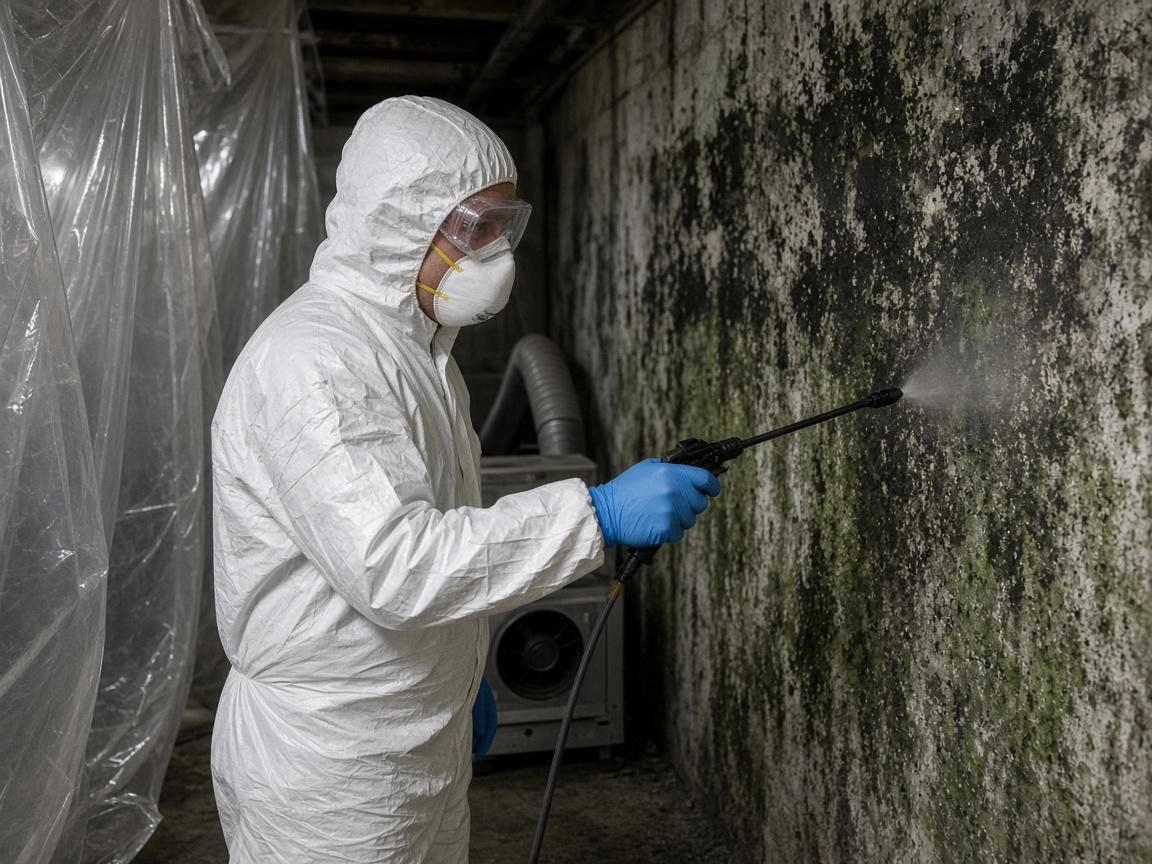
Before remediation begins, the affected area is isolated with polyethylene sheeting and negative air pressure. This prevents spores from spreading to unaffected areas of the home during the work. HEPA air scrubbers continuously filter airborne spores during the entire job. Workers in the containment zone use full PPE including respirators, disposable coveralls, and gloves.
What Gets Removed vs. What Gets Treated
Porous materials with significant mold growth — drywall, insulation, carpet — generally need to be removed and disposed of properly. Mold-affected wood framing is treated with HEPA vacuuming, wire brushing, and antimicrobial application; replacement is only necessary if structural integrity is compromised. Non-porous surfaces are cleaned and treated. Decisions are based on the S520 standard, not arbitrary removal.
Air Quality Testing and Clearance
Post-remediation clearance testing involves air sampling inside and outside the containment zone, with comparison to outdoor baseline levels. Spore counts inside should not exceed outdoor levels after remediation is complete. We can arrange independent clearance testing through a certified industrial hygienist. We recommend third-party testing for significant remediation projects — it provides objective verification that the work was done correctly.
Common Mold Species in Vancouver Homes
The most common mold species we encounter in Metro Vancouver basements and crawl spaces: Penicillium and Aspergillus (common environmental moulds, typically blue-green, often found in damp crawl spaces and after minor leaks), Cladosporium (dark green/black, very common in damp wall cavities and window frames), Stachybotrys chartarum (the so-called 'black mold', requires chronic moisture, found in cases of long-term water damage or flooding that wasn't addressed). Species identification requires professional testing — you can't tell a dangerous mold from a benign one by colour alone.
Preventing Mold After Restoration
After remediation and drying, the moisture source must be addressed or mold will return. We apply antimicrobial treatment to affected structural surfaces as a preventive measure. We also recommend improving basement ventilation, maintaining indoor humidity below 50%, and using a quality dehumidifier in chronically damp basements during Vancouver's rainy season.
Frequently Asked Questions
How do I know if I have a mold problem?+
Musty odours, visible discolouration on walls or ceilings, unexplained respiratory symptoms, or a history of water damage are all indicators. Professional air quality testing and visual inspection can confirm.
Is black mold dangerous?+
Any mold in significant quantities in a living space is a health concern. The term 'black mold' is often used loosely — true Stachybotrys chartarum requires chronic moisture over weeks to months. Whatever the species, mold that's spread through a living space needs professional remediation.
Can I remediate mold myself?+
Small, isolated patches (under about 1 square metre) on non-porous surfaces can potentially be cleaned with proper PPE and biocides. Larger areas, any mold in HVAC systems, or mold after a significant water event should be handled professionally to avoid spreading spores and ensure the problem is actually resolved.
How long does mold remediation take?+
A contained basement or crawl space job typically takes 1 to 3 days for the remediation work itself, plus time for clearance testing. Larger or more complex jobs take longer.
Related Services
Basement Flooding
Your basement took on water — and every extra hour means deeper damage, spreadin...
Water Damage Restoration
Water damage goes deeper than what you can see. Moisture wicks into walls, subfl...
Water Extraction
Standing water is a structural and health threat. The faster it comes out, the l...